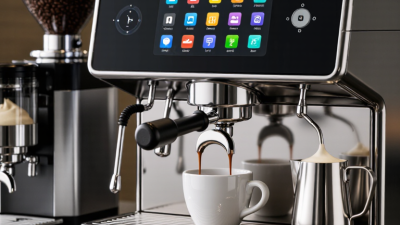
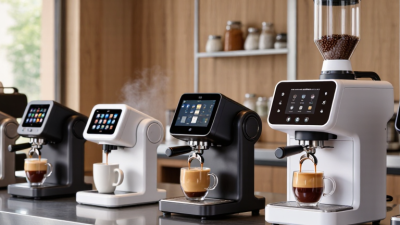
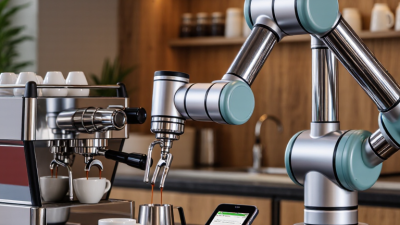
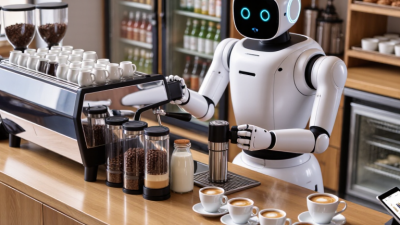
China’s coffee-equipment sector includes manufacturers and integrators serving cafés, hotels, offices, and other commercial spaces. As demand grows for faster, more consistent service, automated coffee systems are drawing attention. A Coffee Robot Machine can combine espresso equipment, robotic arms, grinders, and ordering software. The exact setup varies by supplier. Looks impressive. But the daily workflow matters more.
This article explores leading Coffee Robot Machine suppliers in China and the factors that help distinguish them. It considers product range, customization, production experience, technical support, and the availability of working demonstrations. Buyers can ask how the machine handles peak-hour orders, milk preparation, cleaning, and ingredient refills. They should also request clear specifications and discuss installation, staff training, spare parts, and response times. Small details count. A live demonstration can reveal more than polished product photos.
Supplier rankings can change, and claims about output or reliability deserve verification. Not every system suits every venue; a compact café and a busy transport hub have different needs. This comparison is a starting point, not a substitute for checking references and testing a machine against real service conditions. That distinction is easy to overlook. The right partner should explain both what the equipment can do and where its limits remain.
China’s coffee robot machine industry is developing alongside a fast-growing café market. World Coffee Portal’s Project Café China 2024 counted 49,691 branded coffee shop outlets in China, up 58% year on year to November 2023. More outlets can mean more interest in automated brewing, especially where staff need to serve drinks quickly in compact spaces. But growth does not mean every café needs a robot. Small footprint matters.
The manufacturing base is substantial. The International Federation of Robotics reported that China installed 276,288 industrial robots in 2023, representing 51% of global installations. This figure covers industrial robots, not coffee machines specifically. It does, however, show the scale of China’s automation ecosystem and supplier capabilities in areas such as motion control, machine vision, and system integration. Coffee equipment still needs precise dosing, stable water temperature, and reliable cleaning routines.
Suppliers differ in how well they combine these parts. A useful evaluation looks beyond a smooth demonstration: test drink consistency, refill time, maintenance access, and performance during a busy service period. A robot that makes one attractive cup is not necessarily ready for daily operation. The outlook is promising, but evidence on coffee-specific deployments remains limited. That gap deserves attention.
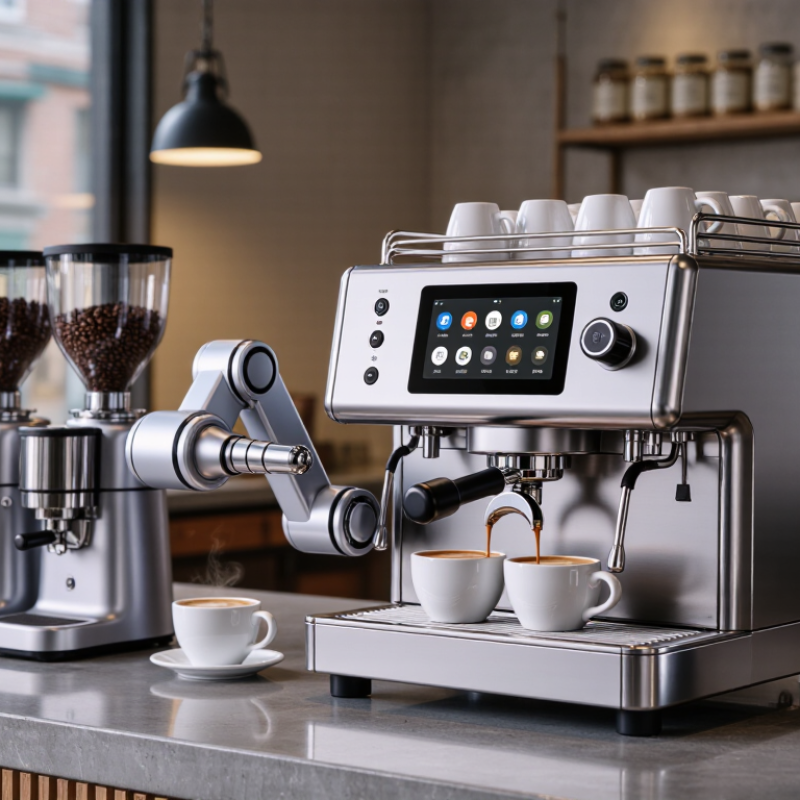
A coffee robot machine combines a brewing system with automated movement and controls. A user selects a drink on a screen, and the machine follows a programmed recipe. Grinders dose beans, pumps move water, and temperature sensors help keep extraction consistent. Some systems also position cups, dispense milk, or move finished drinks to a pickup shelf. Small details matter. A misplaced cup or an empty hopper can interrupt the whole sequence.
The International Federation of Robotics reported that professional service robot sales reached nearly 205,000 units in 2023, across many applications, not coffee machines alone (World Robotics 2024). This wider trend helps explain why automated beverage stations are appearing in busy workplaces and public venues. The National Coffee Association’s 2024 National Coffee Data Trends report found that 67% of U.S. adults had coffee in the previous day. That demand makes unattended or lightly staffed coffee points relevant in offices, hotels, campuses, and transport hubs.
For buyers comparing suppliers in China, the operating environment matters as much as the machine’s menu. Check cleaning access, ingredient refilling, cup compatibility, service response, and performance during peak queues. Ask for repeatable test results, not just a polished demonstration. Automation can reduce repetitive work, but it cannot fix poor maintenance or inconsistent ingredients. The handoff can still fail. A real-site trial may reveal awkward steps that a showroom hides.
Supplier landscape by capability: This is a practical comparison of supplier types, not a ranked list of named companies or brands. A coffee robot machine typically combines a robotic arm or automated mechanism with a coffee machine, payment interface, and order-control software.
| Supplier Type | Typical Capabilities | How the Machine Works | Common Applications | Key Details to Verify |
|---|---|---|---|---|
| Robotic-arm system integrator | Integrates an industrial or collaborative robot with coffee equipment, cups, and a serving area. | Software sends an order to the robot. The arm moves a cup between workstations while the coffee machine prepares the selected drink. | Shopping malls, office lobbies, event venues, and staffed café installations. | Reach and payload requirements, safety features, installation footprint, service access, and compatibility with the selected coffee machine. |
| Automated coffee-kiosk manufacturer | Supplies an enclosed or self-service kiosk with ordering, payment, dispensing, and basic remote monitoring. | A customer selects a drink and pays at a screen or supported payment terminal. The kiosk controls preparation and dispenses the finished beverage. | Transport hubs, campuses, hospitals, convenience locations, and other spaces with limited counter service. | Payment methods supported in the destination market, cleaning access, ingredient replenishment, connectivity, and local electrical requirements. |
| Coffee-equipment OEM or ODM supplier | Manufactures or customizes coffee machines and may provide the brewing, grinding, milk, or dispensing modules used in a robotic setup. | The coffee equipment handles recipe steps such as grinding, dosing, brewing, and beverage dispensing; an external controller or robot coordinates the wider workflow. | Automated kiosks, robotic cafés, hotel self-service areas, and customized beverage installations. | Available recipes, daily cleaning procedures, water and drainage needs, component availability, and whether interfaces support external control. |
| Vision and automation integrator | Adds sensors, machine vision, control software, and integration between the robot, coffee machine, and order system. | Sensors or cameras can help detect cup position or confirm selected process steps. Control software coordinates equipment and reports operating status. | Installations with variable cup positions, multiple preparation steps, or a need to connect equipment from different suppliers. | What the vision system detects, how errors are handled, software ownership, data security, and the scope of commissioning support. |
| Turnkey robotic-café solution provider | Coordinates the robot, coffee equipment, kiosk enclosure, ordering interface, and installation as a combined project. | The order system passes a drink selection to the control system, which sequences preparation, robotic handling where applicable, and dispensing. | Unstaffed or partially staffed cafés, branded service environments, and custom projects requiring multiple integrated components. | Responsibility for system integration, acceptance testing, spare parts, software updates, staff training, and after-sales service in the operating region. |
Typical operating sequence: Order and payment → cup or container positioning → ingredient preparation and brewing → robotic handling or dispensing → order completion and cleaning cycle. Actual steps vary by machine design and menu.
Leading coffee robot machine suppliers in China should offer more than an impressive showroom demonstration. Look for teams that can explain grinder calibration, milk handling, cleaning cycles, and payment-system integration in clear terms. Ask for a live test using your intended beans and cup sizes. Watch whether the robot places cups consistently and recovers smoothly after a jam. Small details matter. A polished demo may hide slow maintenance or limited menu flexibility, so request a realistic operating trial.
Tips: Check the machine’s daily cleaning steps, spare-parts availability, warranty scope, and remote-support hours. Ask for written service terms. Keep the answers.
Compare suppliers by asking for installation requirements, operator training, and references from similar locations. A compact café and a busy transport hub need different output rates. Request data on drinks per hour, but verify it under conditions close to your own site. Also confirm whether software updates and interface changes are included or billed separately. Do not rely on a single sales sheet. It can leave gaps. A supplier may be capable, yet still be a poor fit if communication is slow or service coverage is unclear. Note any unanswered questions before signing.
Chinese coffee robot suppliers differ mainly in system design, customization, and service depth. Some deliver complete kiosks with robotic arms, grinders, brewers, payment terminals, and cleaning modules. Others focus on compact brewing units or provide integration for existing café equipment. The difference is visible in a busy lobby: one machine may offer many drink recipes, while another prioritizes fast espresso preparation and a smaller footprint. More options can mean more maintenance.
Technology choices matter. Vision systems can help a robot position cups and detect spills, while temperature sensors support consistent brewing. Suppliers also vary in milk handling, remote diagnostics, and software access. Ask for cycle-time tests using your actual menu, cup sizes, and ingredients. A polished demonstration is not enough. Real cleaning time matters.
China’s wider automation base offers useful context, not proof that every coffee machine performs well. The International Federation of Robotics’ World Robotics 2024 report recorded 276,288 industrial robot installations in China during 2023, about 51% of the global total. That scale supports a broad manufacturing ecosystem, but coffee-specific reliability still needs verification. Request service-response targets, spare-parts lists, and repeated drink tests. I would also check how the machine handles a small fault. Suppliers do not always publish comparable uptime data, so buyers may need to verify claims independently.
A coffee robot machine is only as dependable as the supplier behind it. Ask for documented brewing consistency, cup capacity, cleaning steps, and service response times. Request a live test using your own beans, milk, and cup sizes. Watch the machine during a busy sequence, not just one perfect demonstration. Small details matter: a difficult-to-remove drip tray can slow daily cleaning.
Check the supplier’s engineering and support capabilities. Can it provide replacement parts, remote diagnostics, and clear maintenance schedules? The International Federation of Robotics reported 541,302 industrial robot installations worldwide in 2023, showing how widely automation is being adopted. But a coffee robot operates in a wet, customer-facing environment, so industrial automation figures alone cannot prove suitability. Ask for references from comparable locations and written uptime or warranty terms.
Match capacity to real demand, rather than a sales forecast. The National Coffee Association’s 2024 National Coffee Data Trends report found that 67% of U.S. adults had coffee in the previous day, a record in its survey history. That is useful demand context, not a forecast for every Chinese site. Still, test it. A supplier’s willingness to discuss limitations can be more revealing than a polished brochure. No checklist catches everything.