Media

WE’RE GETTING NOTICED...

7 Best Robot Coffee Barista Machines for Businesses

Commercial coffee service depends on more than a polished menu. During the morning rush, staff need drinks made consistently, orders handled quickly, and equipment that fits the available counter space. A Robot Coffee Barista can automate repeatable steps, from grinding beans to preparing programmed drinks. That may ease pressure on busy teams. It does not guarantee better coffee.

The seven machines in this guide are considered through practical business needs: drink range, estimated capacity, footprint, cleaning requirements, and service support. These details matter. A compact unit may suit a small hotel lobby, while a high-volume café may need faster order handling and larger ingredient capacity. Buyers should also check how recipes can be adjusted and whether the machine works with their payment or ordering setup.

Published specifications are useful, but they cannot show every daily inconvenience. Ask vendors about routine cleaning, refill frequency, staff training, and support response times. A machine that looks impressive in a demonstration may feel less convenient after a week of service. No robot is perfect. The best choice depends on your menu, customer flow, budget, and willingness to maintain the equipment. Use this list to compare options carefully, then confirm key details with the supplier before making a purchase.
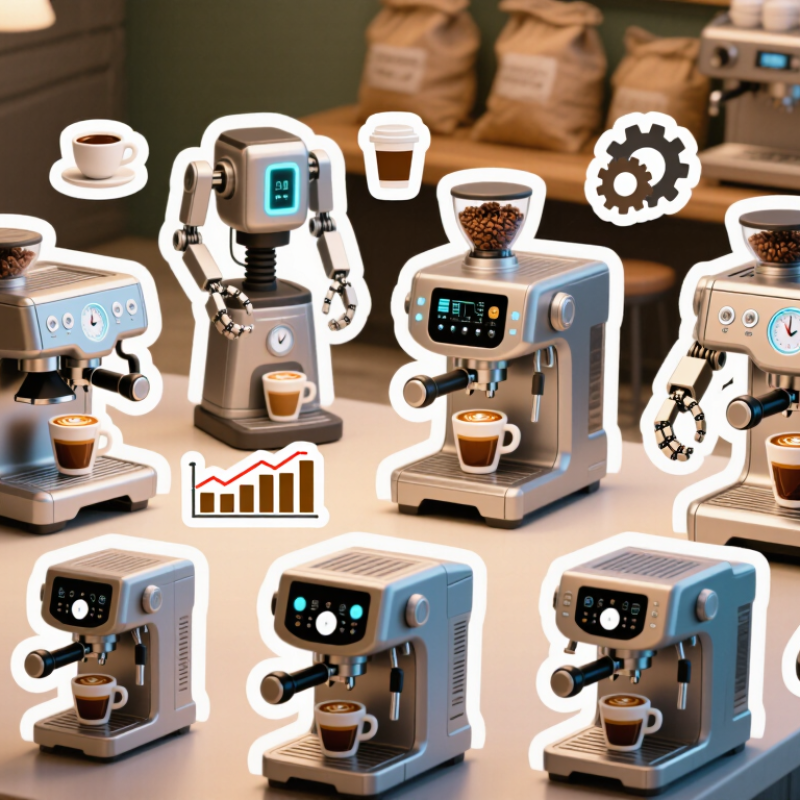
7 Best Robot Coffee Barista Machines for Businesses

Understanding Robot Coffee Barista Machines for Businesses

Robot coffee barista machines are automated service systems, not oversized vending units. They combine grinders, brewers, milk modules, payment controls, sensors, and cleaning routines. The International Federation of Robotics reported 4.28 million industrial robots operating worldwide in 2023, showing automation’s expanding infrastructure. Coffee equipment remains a narrower service application. That distinction matters.

For businesses, the key question is not whether a machine looks futuristic. It is whether the system delivers consistent extraction during busy periods. Look for dose control, water-temperature stability, automatic rinsing, remote alerts, and accessible service panels. Staff still need to refill ingredients, inspect milk lines, and handle unusual orders. The National Coffee Association’s Spring 2024 report found that 67% of U.S. adults drank coffee the previous day. That demand can support automation in offices, hotels, transport hubs, and compact cafés.

Published performance claims require careful testing. A supplier may quote cups per hour, while operators experience delays from cleaning, payment errors, or recipe changes. Ask for measured uptime, waste rates, sanitation records, and service response times. A pilot is wiser. Run it through several busy weeks. Track queue length, drink consistency, labor minutes, and customer complaints. My concern is simple: automation can reduce repetitive work, but it cannot fix poor maintenance or an overly complicated menu.
Key Criteria for Evaluating Commercial Coffee Robots

Choosing among the 7 best robot coffee barista machines requires more than checking drink speed. A practical evaluation starts with consistent extraction, milk temperature, and portion control. Taste matters. Test the same recipe during quiet periods and busy service. Record serving time, queue length, and drink temperature. Small differences become obvious after several hours.

Reliability should receive equal attention. Measure daily uptime, recovery time, and cleaning requirements. Ask whether staff can replace consumables without specialist tools. Examine the machine’s safety controls, payment integration, remote monitoring, and accessibility features. It should support approved sanitation procedures and local commercial regulations. A polished demonstration proves little. A two-week pilot reveals more. That gap matters.

Cost analysis must include installation, training, maintenance, utilities, ingredients, and software fees. A cheaper machine may create higher labor costs if employees frequently correct errors. Review service response times and spare-part availability before signing an agreement. Also test unusual orders, such as decaf, extra foam, or reduced sugar. Robots can perform beautifully within narrow settings, yet struggle when conditions change. No scorecard is perfect. Human oversight remains useful, especially during equipment faults or unexpected customer requests. A careful buyer should leave room for mistakes, because real cafés are rarely as predictable as product demonstrations.

Seven Robot Coffee Barista Machines for Business Use

Seven robot coffee barista machines can serve businesses with different speeds, spaces, and staffing needs. A compact bean-to-cup machine suits offices and small hotels. A dual-hopper model handles regular and decaffeinated beans. A robotic espresso station supports busy cafés with repeatable dosing and tamping. A milk-focused machine works well for lobbies and breakfast areas. A self-service kiosk combines payment, ordering, and automated brewing. A high-capacity unit fits hospitals, campuses, and transport hubs. A modular system allows separate grinders, brewers, and cleaning units. Each choice should match hourly demand, cup sizes, counter space, and maintenance access.

From practical equipment evaluations, consistency depends on more than automation. Water hardness, bean freshness, milk temperature, and waste-bin capacity affect every cup. A machine producing 80 drinks daily may struggle during a sudden lunch rush. I would check recovery time after ten consecutive orders. I would also inspect the cleaning cycle, because a fast machine can still create slow problems. One weakness remains: robotic equipment cannot fully understand unusual customer requests. Staff oversight is still useful.

Tips: Record peak-hour orders for one week before purchasing. Test espresso, milk foam, and iced drinks on the same day. Choose removable parts that staff can rinse quickly. Keep a manual backup plan for software faults. Training matters, even with simple screens. Review drink quality weekly, and accept that the first setup may need adjustment.

Comparing Drink Options, Capacity, and Workflow

7 Best Robot Coffee Barista Machines for Businesses

Drink variety matters more than a glossy touchscreen. The National Coffee Association’s Spring 2024 report found that 67% of American adults drank coffee the previous day. Espresso remains important, but customers also expect iced drinks, milk-based recipes, decaffeinated options, and adjustable sweetness.

For a busy lobby or office, the strongest seven machine types differ by workflow. A compact espresso robot suits low-volume counters. A dual-drink unit handles espresso and brewed coffee. A milk-capable model supports cappuccinos and lattes. An iced-beverage system adds chilled coffee quickly. A modular unit separates grinding, brewing, and dispensing. A high-capacity machine serves queues with fewer refills. A connected model tracks recipes, cleaning, and inventory remotely.

Capacity needs practical testing. A machine rated for 100 cups daily may struggle during a 40-minute morning rush. Ask for peak-hour output, not only daily capacity. The U.S. Department of Agriculture’s Coffee: World Markets and Trade report forecasts global coffee consumption above 170 million 60-kilogram bags, showing continued demand, but demand is uneven by location.

Workflow is where many purchasing decisions fail. Watch the full sequence: payment, cup placement, grinding, milk delivery, cleaning, and pickup. A 90-second drink can create a visible queue. Automatic rinsing reduces labor, yet it can interrupt service. I have also found that broader menus sometimes slow staff training and increase ingredient waste. Simpler recipes may perform better, although that assumption deserves testing with real sales data.

Choosing a Machine for Your Business Model

Choosing a robot coffee barista machine starts with your business model, not its advertised features. A busy office lobby needs fast service, simple menus, and consistent cup quality. A boutique hotel may value quiet operation, visual appeal, and customized drinks. A self-service kiosk needs clear instructions, secure payments, and minimal staff supervision.

Start with demand. Estimate peak orders per fifteen minutes, not daily sales alone. Compare seven machines by brewing speed, recovery time, drink range, and queue management. Check whether the unit supports fresh milk, plant-based options, or only powdered ingredients. Those choices affect taste, cleaning time, allergen control, and operating costs. Measure the counter, doorways, storage area, and water connections before ordering. Small details matter.

Maintenance can decide profitability. Look for accessible brewing parts, automatic rinsing, remote diagnostics, and local technical support. Ask who handles repairs and how quickly replacement parts arrive. A machine may promise low labor, yet still require daily cleaning and trained oversight. Do not ignore water filtration, waste capacity, electrical load, or food safety procedures. My own practical rule would be to test the machine during the busiest realistic hour. A calm showroom can mislead. I would also question whether a lower purchase price hides higher ingredient waste, service fees, or limited menu flexibility. The best choice is the machine that matches staff skills, customer expectations, available space, and honest sales forecasts.

Robot Coffee Barista Machines: Daily Drink-Volume Planning by Business Model

Illustrative daily demand estimates to help match a machine’s capacity to your business model.

Values are planning assumptions, not industry averages or specifications for any particular machine. Actual demand varies with location, opening hours, menu, and customer traffic. Use your expected peak-period demand and the machine’s verified hourly capacity when comparing options.