A Hardwood Bathroom Vanity is a bathroom cabinet made primarily from solid hardwood, such as oak, maple, or walnut. It supports the sink, stores daily essentials, and brings the grain and texture of natural wood into the room. Look closely at the doors, drawer fronts, and exposed edges. A solid-wood face does not always mean every hidden panel is solid hardwood.
Wood scientist Bruce Hoadley’s work offers a practical reminder: “Wood responds to moisture, so construction and finish matter.” This is an editorial summary of his wood-science expertise, not a verified verbatim quotation. In a bathroom, warm steam, splashes, and wet towels can test a vanity’s finish and joinery. Check for sealed surfaces, sturdy drawer joints, and clear care instructions. Good details matter.
Hardwood is durable, but it is not waterproof. That distinction deserves attention. A poorly sealed cabinet can stain, swell, or develop loose joints over time. Ventilation helps, and wiping up standing water does too. Choose a finish suited to bathroom use, then maintain it as directed by the maker. A small finish sample can reveal color and sheen before installation. Still, one flaw remains: real wood varies, and no grain pattern can be perfectly predicted. A thoughtful choice balances appearance, construction, and the room’s everyday conditions.
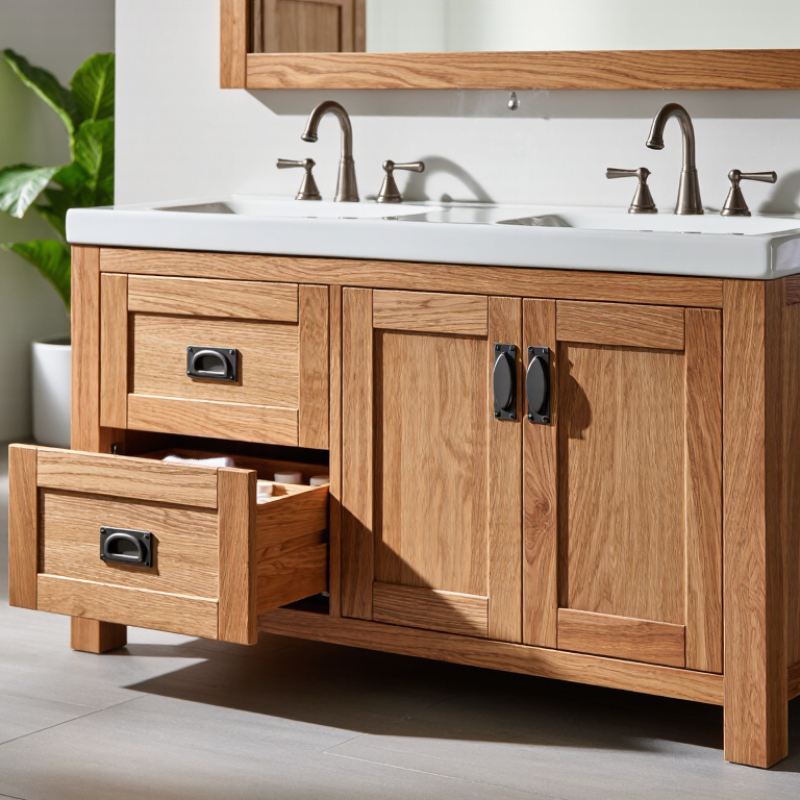
What Is a Hardwood Bathroom Vanity?
What Defines a Hardwood Bathroom Vanity?
A hardwood bathroom vanity is defined by the wood used in its main structural parts, not by its appearance alone. Hardwood comes from broadleaf trees such as oak, maple, or birch. The term does not guarantee that every panel is solid wood. Some vanities use hardwood for the face frame and doors, with plywood or engineered panels elsewhere. Check the construction details. A hardwood veneer is a thin layer of real wood over a core, while solid hardwood extends through the piece. Both can be useful, but they behave differently around moisture.
Bathroom conditions matter. Steam, splashes, and standing water can swell wood or weaken joints over time. A well-built vanity typically has tight joinery, sealed edges, and a durable finish, especially near the sink and floor. Look beneath the basin and inside cabinet corners; those areas can reveal whether the finish is continuous. Hardwood is not automatically waterproof. That distinction is easy to miss. Even a good finish needs prompt drying after spills and steady ventilation. Wood may move slightly as humidity changes, and a door can need adjustment. Not always a flaw. The label “hardwood” alone says little about grade, thickness, or workmanship, so compare the material description with the cabinet’s actual construction.
| Defining Feature | What It Means | Typical Details | What to Check |
|---|---|---|---|
| Hardwood material | The vanity uses wood from a broad-leaved tree species for some or all of its components. | Common examples include oak, maple, birch, cherry, and walnut. “Hardwood” describes the type of tree, not a guarantee that every species is harder than every softwood. | Ask which parts are hardwood: doors, drawer fronts, face frame, cabinet sides, or the entire cabinet. |
| Solid hardwood construction | A solid-hardwood component is made from wood throughout, rather than from a wood veneer over a different core. | Solid wood is often used for door and drawer fronts. Wide panels may be built from joined boards to accommodate natural wood movement. | Look for a clear description of which components are solid wood; the term does not necessarily mean the whole vanity is solid hardwood. |
| Engineered wood components | Some vanities combine hardwood with plywood, medium-density fiberboard (MDF), or particleboard. | Cabinet boxes or panels may use engineered wood, while visible frames and fronts use solid wood or hardwood veneer. | Check the material specifications and the finish on edges and cutouts, especially around plumbing openings. |
| Durability | Resistance to dents, wear, and everyday use depends on the wood species, construction, finish, and care. | Hardness varies among species. A harder wood can resist some dents better, but it is not automatically waterproof or immune to scratches. | Consider the expected use and ask about the finish and care instructions, rather than relying on the word “hardwood” alone. |
| Bathroom moisture protection | Wood and wood-based materials can be affected by persistent moisture, standing water, and poor ventilation. | A properly applied finish helps protect surfaces, but seams, edges, and unsealed areas can remain vulnerable. | Wipe up spills, keep the room ventilated, and follow the manufacturer’s cleaning and maintenance guidance. |
| Joinery and assembly | The way panels, frames, doors, and drawers are joined contributes to the vanity’s stability and service life. | Construction may use mechanical fasteners, dowels, or interlocking joints. Quality depends on the design and execution, not on one joint type alone. | Inspect that doors and drawers move smoothly and that the cabinet feels stable when properly installed. |
| Natural wood variation | Grain, color, and small markings can vary between pieces of real wood. | Variation is a normal characteristic of hardwood and may be more noticeable with transparent or lightly tinted finishes. | Review product photos and finish samples where available; the delivered piece may not match a sample exactly. |
| Practical definition | A hardwood bathroom vanity is a bathroom vanity that uses hardwood in specified components, with construction and finish suited to bathroom use. | The label alone does not establish that every part is solid wood, waterproof, or made from a particular species. | Use the product’s material list, construction details, finish information, and care instructions to understand what you are buying. |



All Rights Reserved. EI Robotica 2023.