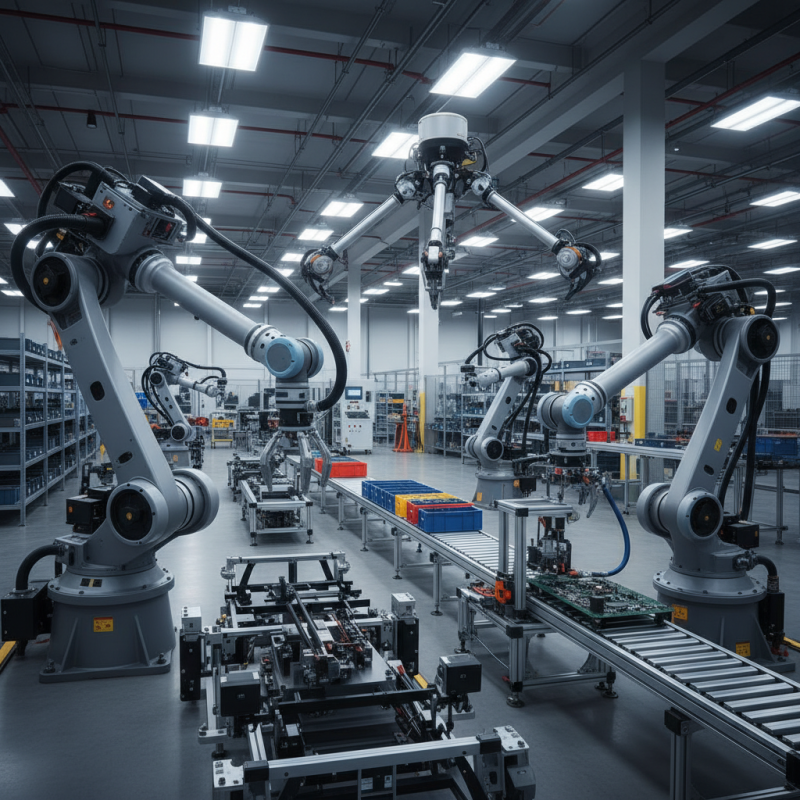
Types of Robotic Manipulators What You Need to Know?
Robotic manipulators have become essential in various industries. They enhance productivity and precision. Understanding the "Types Of Robotic Manipulators" is crucial for anyone looking to integrate this technology effectively.
Different robotic manipulators serve unique purposes. For example, articulated robots are versatile and handle complex tasks. Cartesian robots excel at linear movements, offering simplicity and accuracy. However, selecting the right type can be challenging.
Each type has its benefits and limitations. Some may struggle with heavy loads, while others may lack speed. It’s important to consider these factors during selection. Ensuring alignment between tasks and manipulator types is critical for success. This knowledge can empower businesses to make informed decisions.
Overview of Robotic Manipulators and Their Importance
Robotic manipulators are crucial in modern manufacturing and automation. These machines interact with their environment, performing delicate tasks with precision. They can lift objects, weld materials, and even perform surgeries. The demand for robotic manipulators is on the rise across various industries. This highlights their importance in optimizing production and improving efficiency.
Understanding the types of robotic manipulators is essential. They vary in design, such as articulated arms, SCARA robots, and delta robots. Each type serves different functions and industries. However, choosing the right manipulator can be challenging. Users must assess specific needs, like load capacity and range of motion. There is no one-size-fits-all solution.
Investing in robotic technology also comes with risks. Integrating these systems requires training and maintenance. There can be technical glitches that disrupt operations. Manufacturers need to ensure they have skilled personnel. Balancing innovation with reliability often demands careful planning. Building a robust strategy is key to leveraging these advanced tools effectively.
Classification of Robotic Manipulators by Configuration
Robotic manipulators come in various configurations, tailored for specific tasks and environments. Understanding these configurations is crucial for selecting the right manipulator for your needs. The main types include articulated, Cartesian, SCARA, and delta robots, each distinguished by their joint structures and movement capabilities.
Articulated robots feature rotary joints, allowing for a wide range of motion. They are ideal for tasks requiring flexibility, such as welding and painting. On the other hand, Cartesian robots use linear movements along the axis, which is suitable for pick-and-place operations. SCARA robots combine rotary and linear joints, making them efficient for assembly tasks. Delta robots excel in speed and precision, typically used in packaging and sorting applications.
Despite these advantages, each configuration has limitations. Articulated robots can be more complex to program. Cartesian robots may lack the agility for intricate tasks. It's essential to weigh these factors against the specific requirements of a project. Reflecting on a manipulator’s strengths and weaknesses is crucial in making an informed decision.
Types of Robotic Manipulators - Classification of Robotic Manipulators by Configuration
| Type | Degrees of Freedom | Typical Applications | Advantages | Disadvantages |
| Cartesian Manipulator | 3 | Pick and Place, Plasma Cutting | Simplicity, High Precision | Limited Range of Motion |
| SCARA Manipulator | 4 | Assembly Tasks, Packaging | High Speed, Good Rigid Configuration | Limited Vertical Movement |
| Articulated Robot | 6+ | Welding, Material Handling | Versatile, Greater Range of Motion | Complex Control Systems |
| Delta Robot | 3 | Sorting, High-Speed Operations | High Speed, Compact Design | Limited Payload Capacity |
| Collaborative Robot (Cobot) | 6+ | Assembly, Packaging, Inspection | Safety Features, Easy to Program | Generally Lower Payloads |
Key Characteristics and Functions of Different Manipulator Types
Robotic manipulators are essential in various industries, each offering unique features and functions. These devices can be categorized mainly into articulated, Cartesian, cylindrical, SCARA, and parallel manipulators. Articulated robots, with their multi-jointed arms, are ideal for tasks requiring flexibility and complex movements. They are widely used in automotive assembly lines. According to a 2022 industry report, articulated robots represent over 30% of the global robotics market.
Cartesian robots operate on three linear axes. They excel in tasks like pick-and-place operations, especially in manufacturing settings. Their straightforward design makes them reliable and easy to program. A study found that Cartesian manipulators can increase productivity by 20% when implemented effectively.
Tips: Always consider the specific application when choosing a manipulator type. Evaluate space constraints and required precision. Regular maintenance can enhance lifespan and performance, mitigating potential downtime.
Cylindrical and SCARA manipulators have their niches as well. Cylindrical robots are best for assembly and handling tasks, where outreach and height adjustments are crucial. They have become popular in electronics. SCARA robots are preferred in tasks requiring high-speed and precision assembly. However, these do have limitations in vertical mobility. Reflecting on their use may lead to optimizing workflow and improving efficiency.
Common Applications of Robotic Manipulators Across Industries
Robotic manipulators are increasingly vital across diverse industries. In manufacturing, they streamline assembly lines. These machines handle repetitive tasks efficiently, minimizing errors. Think about welding robots: they ensure precision and consistency. In electronics, robotic arms build intricate devices. They can place tiny components accurately, which human workers might struggle with due to size and speed.
In healthcare, robotic manipulators assist in surgery. They allow for minimally invasive procedures. Surgeons can make smaller incisions, leading to quicker recovery times for patients. In logistics, robots manage inventory. They can transport goods swiftly and securely. This helps businesses reduce downtime and increase productivity.
Tip: Assess your specific needs before choosing a robotic system. Not every solution fits all industries. Also, ensure proper training for operators. Misuse can lead to accidents and inefficiency. Remember, robots excel at handling repetitive tasks, but they lack human intuition. It’s critical to find a balance between automation and human oversight.
Future Trends and Innovations in Robotic Manipulation Technology
The landscape of robotic manipulation technology is rapidly evolving. Innovations are driving the industry towards enhanced efficiency and functionality. According to a recent report by the International Federation of Robotics, the market for industrial robots is projected to grow by 12% annually, highlighting significant advancements in automation.
Recent developments include collaborative robots, or cobots, designed to work alongside humans. These robots improve workplace safety and productivity. In 2022 alone, the sales of cobots surged by 15%, reflecting their increasing importance in various sectors. Additionally, advancements in artificial intelligence are enabling robotic systems to learn from their environment and adapt accordingly. This allows for greater versatility in tasks, though complexities in programming remain a challenge.
Data from market research indicates that autonomous manipulation will dominate future trends. Robotics will extend beyond manufacturing, reaching logistics, healthcare, and even agriculture. However, reliance on technology also raises questions about potential job displacement. As automation increases, companies must balance efficiency with employee welfare. The journey ahead reveals a trajectory of promise and uncertainty, demanding thoughtful consideration as we embrace these changes.
Types of Robotic Manipulators: What You Need to Know
This chart illustrates the popularity of different types of robotic manipulators currently available in the market. SCARA robots lead in popularity, followed by articulated and delta robots. The data reflects current trends and innovations in robotic manipulation technology.