Media

WE’RE GETTING NOTICED...

China Top High Density Fiber Optic Cable Suppliers?

High Density Fiber Optic Cable has become important wherever limited space must carry more connections. Data centers, telecom rooms, and campus networks all face this practical constraint: more ports, tighter cable pathways, and less room for installation errors. The ITU’s Facts and Figures 2024 estimates that 5.5 billion people were using the internet, or 68 percent of the world’s population. GSMA’s The Mobile Economy 2024 also reports 5.6 billion unique mobile subscribers in 2023. These figures are not cable-sales statistics. They do, however, show the expanding connectivity environment that puts pressure on network infrastructure.

China is home to many fiber-optic cable manufacturers and suppliers, but a supplier label alone proves little. Buyers comparing products should examine fiber count, cable diameter, bend performance, connector compatibility, test documentation, and production consistency. Ask for clear specifications and traceable test results. Check how the cable performs in the rack or pathway where it will actually be installed. Small details matter. A compact design may simplify crowded cabinets, yet poor handling or unclear labeling can create avoidable work. That caveat is easy to overlook.

This guide looks at China’s leading High Density Fiber Optic Cable suppliers through practical selection criteria, rather than unsupported rankings. Supplier claims should be checked against samples, documentation, and project requirements. Even a polished datasheet can leave questions unanswered. The right choice depends on the installation, not just the headline fiber count.
China Top High Density Fiber Optic Cable Suppliers?

What High-Density Fiber Optic Cables Are and How They Are Built

High-density fiber optic cable packs more optical fibers into a smaller cable diameter, helping operators connect more ports through limited ducts and rack pathways. Its core may use tightly organized ribbon fibers or compact loose-tube subunits. Around them, manufacturers add strength members, water-blocking materials, and an outer jacket. The design is practical, but not magic: smaller cables can be harder to handle if installation teams rush.

Cable construction depends on the route. A ribbon design can support mass fusion splicing, while loose-tube construction allows fibers to move within protective tubes. The 2018–2023 Annual Internet Report forecast global IP traffic would reach 396 exabytes per month by 2022. That forecast illustrates the pressure behind denser networks, though traffic growth alone does not determine cable choice. Bend radius, connector access, and future fiber expansion matter too.

Tips: Check the cable’s fiber count, outside diameter, and minimum bend radius before installation. Leave room for slack loops and labeled splice trays. A packed pathway looks efficient, but repairs can become awkward when every fiber is tightly routed.

Key Cable Types, Standards, and Performance Characteristics

High-density fiber optic cables are designed to carry many fibers through limited pathways, such as crowded data-center trays or narrow building risers. Common options include loose-tube cables for outdoor routes, tight-buffered cables for indoor spaces, and ribbon cables for high-count links. Microduct cables can suit compact duct networks. Space is tight.

Fiber type affects performance. ITU-T G.652 is widely used for standard single-mode links, while G.657 fibers tolerate tighter bends. IEC 60794 covers fiber-optic cable test methods and requirements. Check the cable’s stated attenuation, minimum bend radius, tensile strength, and crush resistance against the route and installation method. A high fiber count alone does not guarantee an easy installation.

For a real project, review the cable datasheet alongside connector and pathway requirements. Indoor installations may also need appropriate fire-performance ratings under applicable local standards. Keep spare capacity in mind, but avoid oversized cables that complicate pulling and management. A tidy drawing can still hide a difficult bend or congested tray. I would not select by fiber count alone; that shortcut can fail. Each route deserves a physical check before ordering.

Where High-Density Fiber Optic Cables Are Used

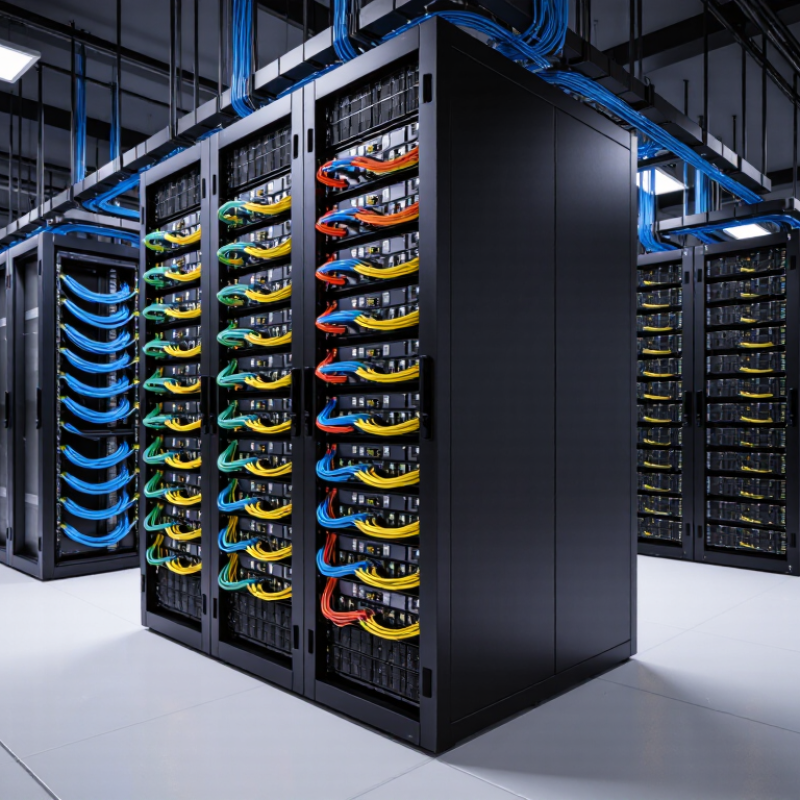
High-density fiber optic cables are used where many connections must fit into limited space. Data centers are a clear example. In a server aisle, several racks may need links to switches, storage systems, and neighboring halls. Compact trunk cables can carry many fibers through overhead trays, reducing congestion above the cabinets. Easier routing helps technicians trace connections, though crowded pathways still need careful labeling.

Telecommunications facilities also use these cables between equipment rooms and distribution frames. Their smaller footprint can help when operators add capacity without expanding a building. In 5G networks, fiber links connect radio sites with aggregation points, where reliable bandwidth matters. Enterprise campuses may use high-count cables between buildings, especially when voice, data, and security systems share a network. Industrial sites can use them for control and monitoring, but cable protection and installation conditions matter.

High density is not automatically better. Very small bend radii, poor routing, or rushed connector work can cause signal loss and make maintenance harder. That detail is easy to overlook. A good design matches fiber count, pathway space, access needs, and future expansion. The right cable should simplify the route, not merely pack more fibers into it.

How to Evaluate Chinese Fiber Optic Cable Suppliers

China Top High Density Fiber Optic Cable Suppliers?

How to Evaluate Chinese Fiber Optic Cable Suppliers

High-density fiber optic cable saves duct space, but compact design is only useful when installation and maintenance remain practical. The OECD’s 2023 broadband statistics report that fiber made up 42% of fixed broadband subscriptions across OECD countries in June 2023. That growth increases demand for dependable cable and consistent production quality. When comparing Chinese suppliers, request product drawings, fiber-count options, outer-diameter tolerances, attenuation values, and minimum bend radius. Check whether test procedures align with relevant IEC 60794 methods and whether the supplier documents each production batch.

Ask for recent test records, not just a polished sample. Confirm tensile and crush performance for the intended installation, then check connector compatibility and packaging details. A sample may look excellent while hiding inconsistent batch control. That is easy to miss. Review how the supplier handles nonconforming products, traceability, and engineering changes. Clear answers matter as much as a low quotation.

Tips: Request a sample reel and inspect it with the same tools used at your site. Compare measured diameter and markings with the datasheet. Ask for third-party or factory test reports, and verify the tested model matches your order. One caution: a dense cable can complicate access in a crowded closure, so evaluate handling—not fiber count alone.

Leading Chinese Suppliers and Their Product Capabilities

Chinese high-density fiber optic cable suppliers serve data-center, telecom, and campus projects with several cable architectures. Common offerings include high-count ribbon cables, loose-tube outdoor cables, and compact microduct designs. Ribbon fibers can simplify mass fusion splicing, while microduct cables suit congested pathways and air-blown installation.

Fit matters. Fiber count alone is not a buying decision.

Synergy Research Group reported 1,136 operational hyperscale data centers worldwide at the end of 2024, reflecting sustained demand for scalable network infrastructure. When comparing suppliers, review tested attenuation, tensile strength, crush resistance, and performance across the specified temperature range. IEC 60794 standards provide relevant cable test methods.

Ask for recent test reports, traceability records, and samples from the intended production line, not only catalog sheets. A sample should be checked for jacket markings, dimensions, and splicing behavior under real installation conditions.

Details matter.

Catalog figures can flatter reality; field handling may reveal stiff jackets, inconsistent dimensions, or slow documentation. A small pilot order is useful, though it cannot predict every site condition.