Top 10 Types of Fiber Optic Connectors You Should Know?
In the ever-evolving landscape of data communication, understanding Fiber Optic Connectors is crucial. According to industry expert Dr. Emily Chen, "The right connector can make or break your network’s performance." This statement underscores the importance of choosing the correct type of fiber optic connector for various applications.
Fiber optic connectors play a vital role in maintaining connectivity and ensuring high-speed data transmission. They come in various forms, each designed for specific uses. Some are optimal for precision in high-density environments, while others excel in rugged conditions. Knowing the right type to use can be challenging.
Choosing among the top ten types can be overwhelming. There are performance variations, compatibility issues, and cost factors to consider. Many users find themselves unsure which connector suits their needs best. Reflecting on these choices can lead to better decisions and improved network efficiency. It's essential to weigh the pros and cons as each type has its unique advantages and drawbacks.
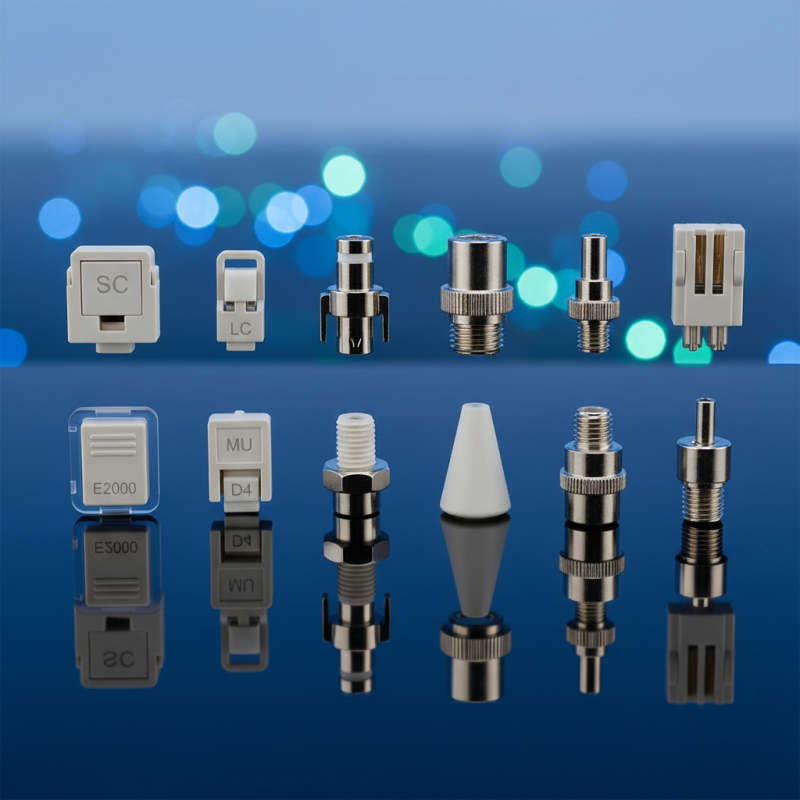
Understanding Fiber Optic Connectors: An Overview
Fiber optic connectors play a crucial role in establishing high-speed communication networks. These connectors ensure that light signals pass efficiently between fiber optic cables. Understanding their types can aid in making better choices for your networking needs. Popular types include SC, LC, and ST connectors, each with unique features and uses.
When choosing a connector, consider the application. SC connectors are often used in data centers for their durability. LC connectors, on the other hand, are favored for high-density applications due to their compact size. Each type has its strengths and weaknesses. Reflect on what will work best in your specific environment.
Tips for choosing connectors: Always check compatibility with existing equipment. Avoid overloading connections, as this can lead to signal loss. Proper handling is essential; damaged connectors can disrupt performance. Take time to research the specifications for each type to avoid mistakes. Missteps in selection could lead to cost overruns or networking issues down the line.
Top 10 Types of Fiber Optic Connectors
Analyzing the Key Features of Each Fiber Optic Connector Type
Fiber optic connectors play a crucial role in communication technologies. Each type has unique features and applications. The SC connector, for instance, is known for its push-pull design. This allows for easy insertion and removal. According to industry reports, SC connectors can handle high-density fiber environments. They are widely used in data centers and telecommunications networks.
In contrast, LC connectors are smaller with a compact design. This makes them perfect for dense installations. Data indicates that LC connectors are becoming the standard in modern networks. Their reliability and efficiency contribute to their popularity. Yet, they require precise alignment. Misalignment can lead to signal loss.
MT-RJ connectors offer another option. Their unique design allows for duplex connections in one unit. However, they may not perform as well in high-bandwidth situations. As fiber technology advances, the demand for reliable connectors grows. Understanding these variations is essential for optimizing network performance.
Comparative Advantages of Different Fiber Optic Connectors
Fiber optic connectors play a crucial role in modern communication systems. Each type has unique advantages. For instance, SC connectors are known for their durability. They are easy to use and provide low signal loss. In contrast, LC connectors are compact and ideal for high-density applications. Their smaller size allows for more connections in the same space.
MPO connectors, meanwhile, are perfect for data centers. They support multiple fibers in a single connector, enhancing efficiency. However, they can be complex to install correctly. Dewar connectors, on the other hand, excel in harsh environments. They are rugged and designed for high-performance applications. Yet, their larger size might not fit certain setups.
Understanding these connectors helps in choosing the right one for specific needs. Misjudging the application could lead to inefficiencies. A wrong connection choice often results in increased maintenance costs. This is something many overlook, yet it’s vital for seamless data transmission. Being aware of each connector’s strengths and weaknesses is essential for optimal performance in fiber optics.
Applications and Industries Utilizing Fiber Optic Connectors
Fiber optic connectors serve crucial roles across various industries. Data centers, for instance, rely heavily on these connectors for high-speed data transmission. According to industry reports, over 80% of data centers now use fiber optic technology for their backbone infrastructure. This shift has enhanced performance significantly, enabling faster internet speeds and greater bandwidth.
Telecommunications is another key sector benefiting from fiber optic connectors. They are essential in connecting networks and facilitating communication. Recent studies show that the global fiber optic connector market is projected to reach $7.3 billion by 2027, growing at a CAGR of 10.5%. This surge reflects the increasing demand for reliable communication channels. However, this rapid growth poses challenges in standardizing types of connectors across various applications.
In healthcare, fiber optic connectors are integral in medical imaging systems and surgical tools. They provide real-time data transmission crucial for diagnostics. Yet, the integration process faces hurdles. Some facilities struggle with compatibility issues and require comprehensive training for technicians. Improving these areas remains vital for maximizing the benefits of fiber optics in medical settings.
Future Trends in Fiber Optic Connector Technology
The future of fiber optic connector technology appears promising and full of innovation. As the demand for high-speed internet grows, connectors must keep pace. New designs focus on reducing light loss and increasing data capacity. This ensures more efficient data transmission. Innovations like push-pull connectors are gaining traction. They offer improved ease of use in dense installations. Smaller, more flexible options could revolutionize installations in tight spaces.
What about sustainability? There's a push for eco-friendly materials in manufacturing. Reducing waste in production is crucial. Some companies are experimenting with biodegradable connectors. We need to think about the entire lifecycle, from production to disposal. Such initiatives can greatly impact the environment. However, challenges remain in balancing durability with eco-friendliness.
Looking to the future, we may see more advancements in connector durability. Many connectors struggle under physical stress. Increased durability can extend the life of installations. Yet, ensuring compatibility with old systems poses a challenge. Embracing both old and new technologies requires careful planning. The evolution of fiber optic connectors will shape the entire industry.