China’s electric mobility sector is expanding beyond conventional passenger cars. In 2024, China Association of Automobile Manufacturers reported over 12.8 million new-energy vehicle sales. This figure does not isolate L7e Quadricycle products. However, it shows the industrial depth supporting batteries, motors, controllers, and lightweight vehicle bodies.
The International Energy Agency’s Global EV Outlook 2025 recorded more than 17 million electric car sales worldwide in 2024. Smaller urban vehicles are not always counted separately in these statistics. That gap matters. A compact L7e Quadricycle may serve short city trips, campus transport, tourism, or last-mile mobility, while using fewer materials than a full-size car.
This guide examines ten Chinese manufacturers through practical criteria, including vehicle certification, battery safety, range claims, production capability, export experience, and after-sales support. European Regulation (EU) No 168/2013 defines the L7e category through limits covering vehicle mass, power, and construction. Manufacturers must therefore be assessed against the target market, not only attractive brochures.
Details can be decisive. A 5 kWh battery, a 45 km/h speed limit, or a narrow 1.2-metre body changes daily usability. Supplier transparency also matters. Some companies have strong factories but limited international service networks. Others offer polished prototypes without consistent delivery records.
The ranking should not be treated as absolute. Public data remains uneven, and many Chinese producers disclose limited L7e-specific sales information. That is an uncomfortable limitation. Still, verified specifications, documented experience, and realistic operating conditions can provide a more reliable comparison for distributors, fleet buyers, and urban mobility planners.
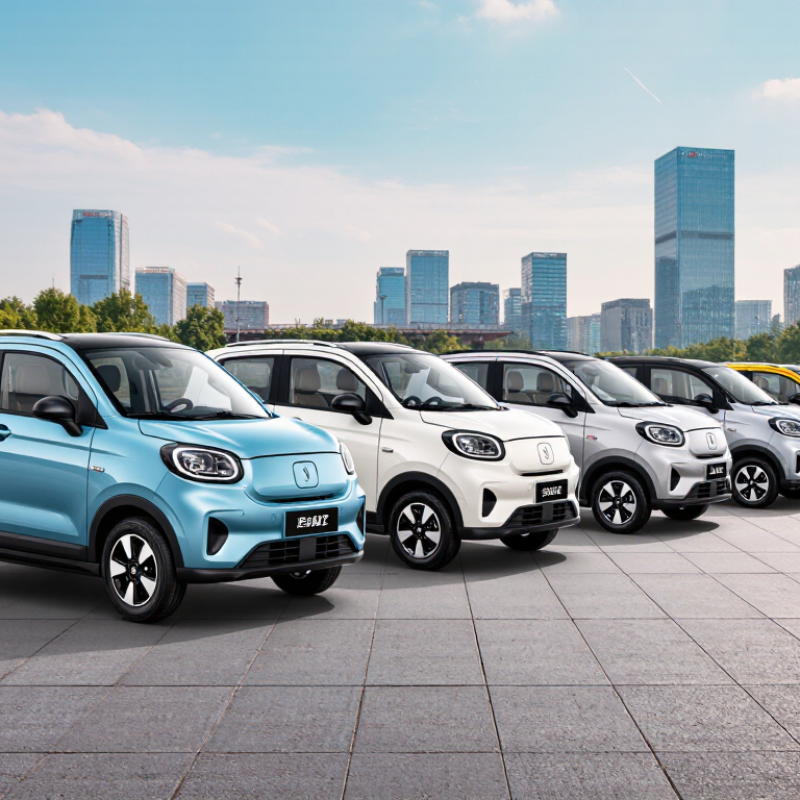
L7e quadricycles are four-wheeled vehicles designed between conventional cars and lighter mobility vehicles. They usually serve urban travel, short commutes, and compact delivery work. Under European classification, an L7e vehicle generally has a maximum design speed of 90 km/h. Its power limit is commonly 15 kW. Mass limits also apply, with different thresholds for passenger and goods versions. Local registration and driving rules may differ.
The category includes heavy quadricycles and heavy quadrimobiles, with subtypes based on seating, structure, and intended use.
Key features include a narrow body, low energy consumption, simple controls, and efficient parking dimensions.
Electric versions often use lithium battery packs, regenerative braking, and digital dashboards.
Safety equipment should include strong occupant protection, reliable lighting, secure restraints, and predictable braking.
A neat specification sheet can still hide weak suspension or poor thermal management. That deserves closer inspection.
When comparing China’s top L7e quadricycle manufacturers, buyers should verify testing documents, production consistency, battery traceability, spare-parts support, and export experience.

China’s L7e quadricycle manufacturing landscape is expanding within a broader electric-vehicle ecosystem. The International Energy Agency reported over 11 million electric car sales in China during 2024. That figure does not measure L7e production directly. However, it shows strong battery, motor, controller, and software capacity.
L7e development requires more than compact styling. Under European Regulation (EU) No 168/2013, heavy quadricycles generally require specific limits for mass, power, speed, and passenger use. Chinese factories increasingly build around modular steel or aluminum frames, lithium battery packs, regenerative braking, and connected dashboards. Production clusters also support stamping, plastic molding, wiring, and final assembly within short supply chains.
The practical difference is visible on the factory floor. A small frame moves between welding stations, while battery technicians check insulation and cell consistency. Export-focused manufacturers must still complete type approval, electromagnetic compatibility tests, braking checks, and crash-related assessments. Requirements vary by destination.
The data remains imperfect. Public databases rarely separate L7e units from low-speed vehicles or other electric microcars. The China Association of Automobile Manufacturers reports strong new-energy vehicle growth, but its categories are broader than L7e. Buyers should therefore examine certification records, battery traceability, warranty procedures, and annual production evidence, not only catalog specifications. Cost pressure is real. So is quality variation.
Selecting China’s top 10 L7e quadricycle manufacturers requires more than comparing factory size or online visibility. The evaluation should begin with legal engineering. Under EU Regulation 168/2013, L7e vehicles generally use four wheels, limited power, and strict mass requirements. Battery-electric models also need evidence aligned with UN Regulation No. 100. Certification matters.
Production capability is the next filter. Industry reports often measure electric mobility through passenger-car sales, but L7e data remains fragmented. The IEA’s Global EV Outlook 2025 reported more than 17 million electric car sales worldwide in 2024. This broader growth shows market momentum, not quadricycle quality. Therefore, our ranking should examine audited annual output, model consistency, quality-control records, and delivery performance. A showroom is not proof.
Battery safety deserves heavy weighting. The selected manufacturers should disclose cell chemistry, thermal protection, charging limits, and independent test results. TÜV and other technical bodies emphasize traceable testing, while ISO 9001 certification can support process reliability, though it cannot guarantee vehicle quality. After-sales support also matters. We would assess warranty length, spare-parts availability, software updates, and repair response times across export markets. Real owner feedback should be reviewed carefully; online comments can be useful, but they are imperfect evidence. A manufacturer with strong engineering may still lack dependable service. That weakness should reduce its score.
| No. | Selection Criterion | Recommended Evaluation Dimension | Evidence or Target Benchmark | Weight | Scoring |
|---|---|---|---|---|---|
| 1 | EU L7e Classification Compliance | Vehicle category, maximum mass, power and dimensional conformity | Documentation should align with Regulation (EU) No 168/2013. L7e vehicles generally have four wheels, a maximum continuous rated power of 15 kW, and mass limits of 450 kg for passenger vehicles or 600 kg for goods vehicles, excluding traction batteries. | 18% | 0–10 |
| 2 | Type-Approval Capability | Ability to support EU type approval and market-specific homologation | Verify completed or active approval projects, technical files, conformity-of-production procedures, test reports and support for applicable EU national registration requirements. | 16% | 0–10 |
| 3 | Powertrain and Battery Engineering | Electric motor, battery system, battery management and thermal safety | Assess battery-cell traceability, BMS protections, insulation monitoring, over-charge and over-discharge protection, thermal-event controls and compliance with applicable battery transport and safety rules. | 14% | 0–10 |
| 4 | Product Safety and Testing | Brake performance, steering, lighting, restraint systems and electrical safety | Require independent laboratory reports, design validation records and documented tests covering braking, electromagnetic compatibility, lighting, seat belts, structural integrity and high-voltage safety where applicable. | 12% | 0–10 |
| 5 | Manufacturing Quality System | Production consistency, supplier control and traceability | Give preference to independently audited ISO 9001 quality systems, documented incoming inspection, end-of-line testing, corrective-action processes and serial-number traceability. | 10% | 0–10 |
| 6 | Production Capacity and Delivery Reliability | Actual output, scalable capacity, lead time and on-time delivery | Use verified production records, factory audit results, capacity by model, standard lead times, order-fill performance and contingency plans for critical components. | 9% | 0–10 |
| 7 | Range, Charging and Usability | Real-world range, charging compatibility and fleet suitability | Compare independently measured range under a stated test cycle, onboard charger specifications, AC charging compatibility, charging time, energy consumption and performance in the intended climate. | 7% | 0–10 |
| 8 | After-Sales Service and Spare Parts | Warranty coverage, technical support and parts availability | Evaluate written warranty terms, service manuals, diagnostic tools, spare-parts catalogues, response times, training support and availability of safety-critical components. | 6% | 0–10 |
| 9 | Export and Documentation Experience | International logistics, documentation accuracy and regulatory communication | Check experience with commercial invoices, packing lists, certificates of origin, battery transport documents, customs classification and destination-market technical documentation. | 4% | 0–10 |
| 10 | Commercial Transparency and Total Cost | Pricing clarity, lifecycle cost and contractual reliability | Compare itemized quotations, tooling charges, payment terms, minimum order quantities, warranty reserves, shipping assumptions, spare-parts pricing and total cost of ownership. | 4% | 0–10 |
| Total Weighted Evaluation | 100% | 100 | |||
Scoring method: Rate each criterion from 0 to 10, multiply the score by its assigned weight, and rank manufacturers by the resulting weighted total. Regulatory requirements should be verified against the latest legislation and the registration rules of the destination market.
China’s L7e sector is developing around compact electric mobility, low operating costs, and export flexibility. The International Energy Agency reported over eight million electric car sales in China during 2023. That figure does not measure quadricycles directly, but it shows the strength of China’s battery and component supply chain.
A practical top-ten profile should examine engineering depth, production consistency, battery safety, and export support. The strongest manufacturers usually fall into clear groups: urban two-seat specialists, fleet-focused producers, modular platform developers, and companies adapting light commercial vehicle technology. Some offer enclosed cabins, narrow bodies, and removable battery systems. Others emphasize weather protection, simple maintenance, or factory customization. Their real differences appear in braking tests, corrosion resistance, thermal management, and parts availability. Catalog claims are not enough.
The ranking remains provisional. Public L7e production data is limited, and some manufacturers disclose little about annual output. The European Union’s L-category framework should therefore guide verification, alongside UNECE technical references and independent inspection records. IEA market data offers useful context, while local certification documents provide stronger product evidence.
Tips: Compare tested range, not promotional range. Request battery warranty terms, charging specifications, and documented export approvals. Inspect door seals and suspension components closely. Small vehicles still face demanding roads.
Choosing among China’s top ten L7e quadricycle manufacturers requires more than comparing advertised prices. Product range matters first. Some factories offer enclosed city cars, compact cargo models, and passenger versions. Others focus on one platform. Check seating layout, battery options, driving range, weather protection, and replacement parts. A test vehicle should handle narrow streets, steep ramps, and repeated short trips without overheating.
Technology claims need practical verification. Review motor ratings, battery chemistry, charging protection, dashboard information, and software support. Safety deserves closer attention. Inspect braking performance, lighting, seat belts, door locks, visibility, and structural quality. Ask for documented test procedures and traceable quality records. Export capability also includes packaging, manuals, spare-part supply, customs documents, and responsive technical service. A factory may export widely, yet communication can still be slow. No shortlist is perfect.
Tips: Request a sample before placing a large order. Measure stopping distance on a dry surface. Check battery performance after several charging cycles. Confirm whether parts match local service tools. Ask for clear warranty exclusions. Visit the production line when possible. Photos are useful, but limited. A polished brochure cannot reveal vibration, loose connectors, or uncomfortable seating. Keep a written comparison sheet, and record every promised specification.