What is Swarm Drones and How Do They Work?
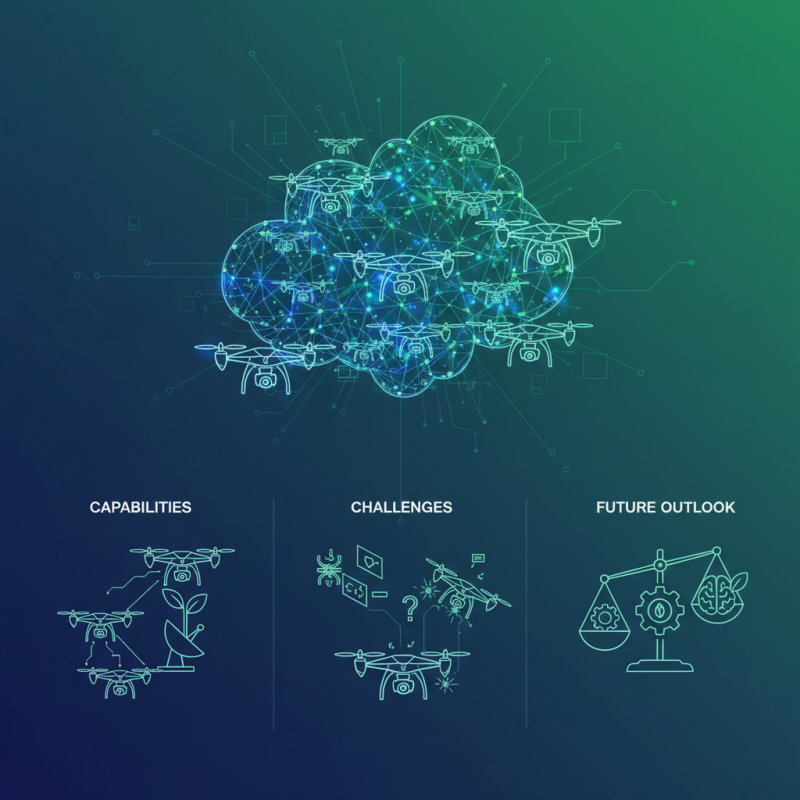
Swarm Drones have become a game-changer in various sectors, from agriculture to defense. A report by MarketsandMarkets estimates that the swarm drone market could reach $19.3 billion by 2026. This rapid growth signifies their potential impact. As technology advances, the applications of swarm drones continue to expand, revealing both opportunities and challenges.
According to Dr. Emily Chen, an expert in drone technology, “Swarm drones can execute complex missions through collective intelligence.” This ability to work together enhances efficiency and effectiveness. However, challenges remain, such as data management and coordination. Each drone must communicate and process information effectively to achieve the desired outcome, and the potential for malfunctions could disrupt an entire operation.
The future of swarm drones is promising but requires careful consideration. Organizations must navigate ethical implications and technical limitations. As swarm drones evolve, the impact on industries will be significant, yet it is essential to reflect on both their capabilities and shortcomings. This balance will ultimately define the success of swarm drones in real-world applications.
What Are Swarm Drones?
Swarm drones represent an innovative approach in the world of unmanned aerial vehicles. These systems consist of multiple drones working together as a cohesive unit. They operate based on collective behavior, similar to how a swarm of bees functions. Each drone communicates with others, sharing data for coordinated actions.
In a swarm, individual drones can adjust their behavior based on real-time information. This allows them to cover larger areas efficiently. For example, a group might be deployed for search and rescue missions. A single drone struggles in tough conditions, but a swarm can adapt and find paths around obstacles.
However, there are challenges. Managing communication among numerous drones can be complex. Signal interference can lead to miscommunication. Additionally, ensuring that each drone acts autonomously while remaining part of a unit raises questions about control and safety. The technology has the potential to revolutionize industries, but there is a need for careful consideration of its implications.
The History and Development of Swarm Drone Technology
Swarm drone technology has evolved dramatically over the years. Initially inspired by nature, researchers studied the behavior of birds and fish. They noticed how these creatures move in groups, forming complex patterns. This observation led to the development of algorithms mimicking such behaviors in drone formations.
In the early stages, swarm drones were primarily experimental. Early models had limitations in communication and coordination. As technology advanced, issues like latency and battery life became crucial. Researchers worked tirelessly to enhance these aspects. Today, swarm drones can share data in real-time, making them more effective for various applications.
Despite progress, challenges remain. For instance, coordinating large groups of drones can still be problematic. Situational awareness among drones is essential for safety. Additionally, the ethical implications of using swarm drones need careful consideration. The balance between innovation and responsible use is vital for the future of this technology.
How Swarm Drones Communicate and Coordinate Their Actions
Swarm drones are revolutionizing the way we think about aerial coordination. They work together in groups that mimic natural swarms, like bees or birds. These drones communicate through a combination of wireless signals and shared algorithms. Each drone can detect its neighbors and adjust its position accordingly. This creates a fluid, dynamic movement that is both adaptable and efficient.
The communication between drones may not always be perfect. There can be delays or loss of signals, which complicates coordination. However, they often utilize simple rules for interaction. For instance, one drone's movement can influence nearby drones, creating a ripple effect. Such interactions lead to complex behaviors that are still being studied.
The challenge lies in ensuring that communication is reliable in varied environments. Moreover, swarm drones often rely on decentralized decision-making. This means no single drone is in charge. Instead, they make collective decisions based on local information. While this allows for flexibility, it also raises questions about efficiency in chaotic situations.
Can drones handle unexpected obstacles? Further research is vital to address these evolving challenges in swarm behavior.
Applications of Swarm Drones in Various Industries
Swarm drones are revolutionizing industries by providing innovative solutions. These drones work together, mimicking a flock of birds. They can cover large areas quickly and efficiently. In agriculture, swarm drones monitor crops, delivering real-time data. Farmers adjust their strategies based on this information. For example, they can identify pest outbreaks early. This timely response can save yields and costs.
In disaster response, swarm drones play a crucial role. They can assess damage after natural disasters, sending back vital images. Their ability to collaborate allows them to search large areas in a fraction of the time. However, challenges remain. Coordinating many drones can lead to potential collisions. Moreover, data privacy concerns must be addressed. These issues require ongoing reflection and improvement.
Logistics is another field seeing swarm drones' potential. They assist in deliveries, working in unison to navigate complex routes. This method improves delivery speed and reduces costs. Yet, regulations around airspace use pose hurdles. As industries explore swarm technology, balancing efficiency and safety becomes essential.
Challenges and Future Directions in Swarm Drone Research
Swarm drones represent a revolutionary approach to aerial tasks. They operate as a cohesive unit, mimicking the behavior of wildlife. This method holds great potential in various sectors. However, challenges remain that researchers must address.
One major obstacle is communication. Drones need to exchange information in real-time to perform efficiently. Yet, interference and signal loss can disrupt this flow. Researchers are exploring more robust communication systems. They aim to ensure drones remain interconnected, even in tough environments.
Another concern is energy management. Swarm drones typically rely on batteries, which can limit flight time. Innovative energy sources could enhance their operational duration. Yet, the balance between weight and power remains a dilemma. Additionally, ethical considerations in swarm deployment often spark debate. Effective regulations are crucial as technology advances. Moving forward, researchers must navigate these hurdles to harness the full potential of swarm drones.
What is Swarm Drones and How Do They Work? - Challenges and Future Directions in Swarm Drone Research
| Aspect | Description |
| Definition | Swarm drones are a collection of drones that communicate and work together to perform tasks autonomously. |
| Key Features | Cooperation, flexibility, scalability, and robustness in dynamic environments. |
| Communication | Drones in a swarm communicate through wireless protocols to share information such as position and status. |
| Applications | Agriculture, surveillance, search and rescue, environmental monitoring, and logistics. |
| Challenges | Collision avoidance, communication reliability, energy management, and real-time decision making. |
| Future Directions | Enhanced AI algorithms, improved battery technology, swarm adaptability in various environments, and regulation compliance. |