What is a Manual Linear Stage and How Does It Work?
A Manual Linear Stage is an essential tool in precision motion control. It allows users to move objects along a straight path with great accuracy. Many industries rely on this device for alignment, positioning, and testing of equipment.
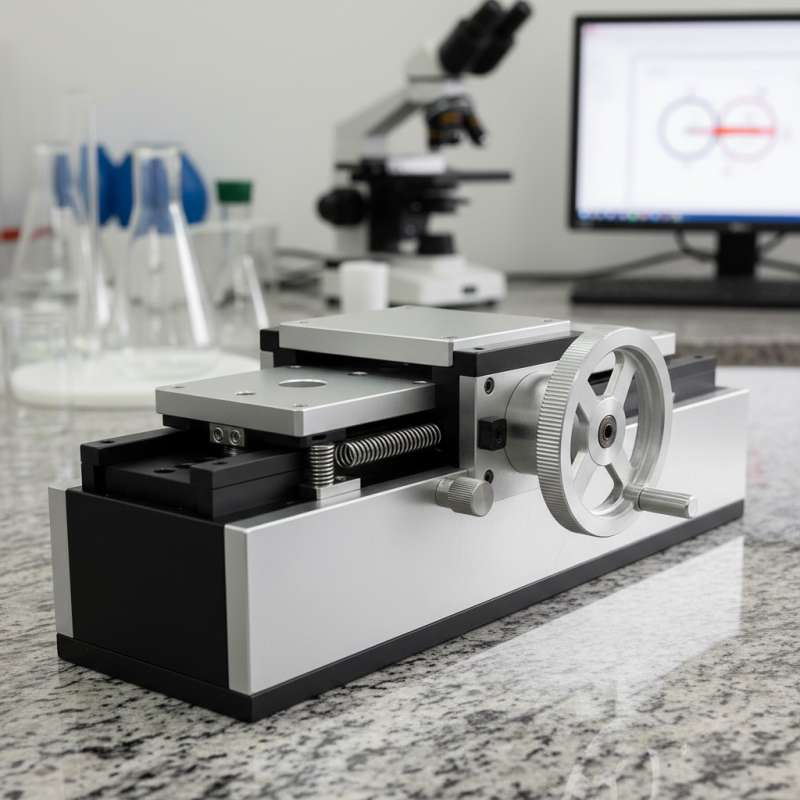
Typically used in laboratories and manufacturing, a Manual Linear Stage has a simple yet effective design. It often consists of a rail, a slider, and a handwheel for adjustments. Users can easily control the movement, making it accessible for various applications. The tactile feedback is satisfying, but it can be slow for high-speed tasks.
Though effective, the Manual Linear Stage is not without its flaws. Users may encounter limitations in range of motion or difficulty in fine-tuning positions. These challenges highlight the need for careful consideration before choosing this tool. Despite these imperfections, the Manual Linear Stage remains a critical component in many technical workflows.
What is a Manual Linear Stage?
A manual linear stage is a precision device used to control movement along a single axis. It typically consists of a platform mounted on linear bearings, allowing smooth sliding. Users manipulate the stage manually, often through a knob or handle. This design is straightforward, making it accessible for various applications.
The manual linear stage’s simplicity brings both advantages and disadvantages. It is easy to set up and requires no power source. However, this reliance on manual operation can lead to inconsistencies. Users must apply equal pressure to achieve precise movements. Variability in user technique can result in errors during positioning.
Precision is the key benefit of these stages. Users can make fine adjustments to their setups. However, it is easy to overlook the impact of friction, which can affect reliability. Regular maintenance is essential for optimal performance. Observing how each part interacts can provide valuable insights for improvement. Balancing ease of use and precision is crucial for effective operation.
Key Components of a Manual Linear Stage
A manual linear stage is a precise tool used in various applications, such as laboratory experiments and industrial machinery. At its core, it consists of key components that facilitate smooth linear motion. The most critical of these components are the guide rails, carriage, and drive mechanism.
The guide rails provide a stable path for the carriage. They ensure the movement is straight and controlled. A well-designed rail system allows for minimal friction. This friction reduction is essential for accurate positioning. The carriage is where the object or device is mounted. It interacts with the rails while allowing easy adjustments.
The drive mechanism is often a simple handwheel or knob. Users can manually adjust the position with this component. Even small errors in the drive mechanism can lead to misalignment. Thus, precision is vital. Maintaining these components is equally important. Dust and wear can affect performance over time. Regular checks can prevent larger issues down the line. Each element plays a significant role in overall functionality. Design flaws or neglect can lead to frustration and inefficiency.
How Manual Linear Stages Operate Mechanically
Manual linear stages are essential tools in various mechanical and research applications. They allow precise movements along a straight path. These stages are often employed in laboratories for experiment setups. Understanding how they operate mechanically can enhance their efficiency.
Manual linear stages utilize a simple, yet effective design. They consist of a platform that moves over a rail or track. This setup is often driven by turning a hand crank or knob. The movement is usually smooth, allowing accurate positioning of tools or samples. Friction often plays a crucial role in this process. If the stage does not move smoothly, it may need lubrication or adjustment.
Tips: Regular maintenance can dramatically improve performance. Clean the rail and lubricate moving parts often. If you experience sticking, identify the cause. Check for dirt or misalignment, which can hinder motion. Simple fixes can lead to better results in your projects.
What is a Manual Linear Stage and How Does It Work?
| Dimension | Description | Material | Load Capacity (kg) | Travel Range (mm) | Price Range (USD) |
| 100 x 100 mm | Compact manual linear stage | Aluminum | 5 | 50 | 150 - 200 |
| 150 x 150 mm | Sturdy manual linear slide | Stainless Steel | 10 | 100 | 250 - 300 |
| 200 x 200 mm | Precision manual stage | Aluminum alloy | 15 | 150 | 300 - 350 |
| 250 x 250 mm | High load manual stage | Steel | 20 | 200 | 400 - 450 |
Applications of Manual Linear Stages in Various Fields
Manual linear stages are widely used across various fields for precise movement and positioning. In laboratory settings, they assist in aligning optical components with great accuracy. Researchers can make micro-adjustments to position lasers or lenses. This ensures optimal alignment for experiments. Scientists rely on these stages to achieve reproducible results in sensitive measurements.
In manufacturing, manual linear stages play a crucial role in assembly processes. Workers can position parts accurately for welding or machining. This enhances efficiency and reduces errors during production. In the realm of art, sculptors and craftsmen utilize linear stages for precise cutting or engraving. They enable intricate designs and detailed work, allowing for creativity. Yet, manual adjustments can sometimes lead to misalignment if not handled carefully. Users must remain attentive and control their focus to achieve the best outcomes.
Applications of Manual Linear Stages in Various Fields
Benefits and Limitations of Manual Linear Stages
Manual linear stages are mechanical devices used for precise linear motion. They offer various benefits, making them suitable for diverse applications. One key advantage is their simplicity. Users can easily operate these stages without requiring complex software or programming. This is particularly beneficial in settings where rapid adjustments are needed.
Additionally, they boast durability, often consisting of robust materials that withstand wear.
However, manual linear stages also come with limitations. Precision can be affected by human error. Users may struggle with achieving consistent positioning. Furthermore, they demand significant physical effort for larger loads. In high-speed environments, these devices may be outpaced by automated alternatives. This raises questions about their efficiency, especially in time-sensitive projects. Some users might find the need for constant manual adjustments tedious.
Reflecting on these factors can help in choosing the right tools for specific tasks.