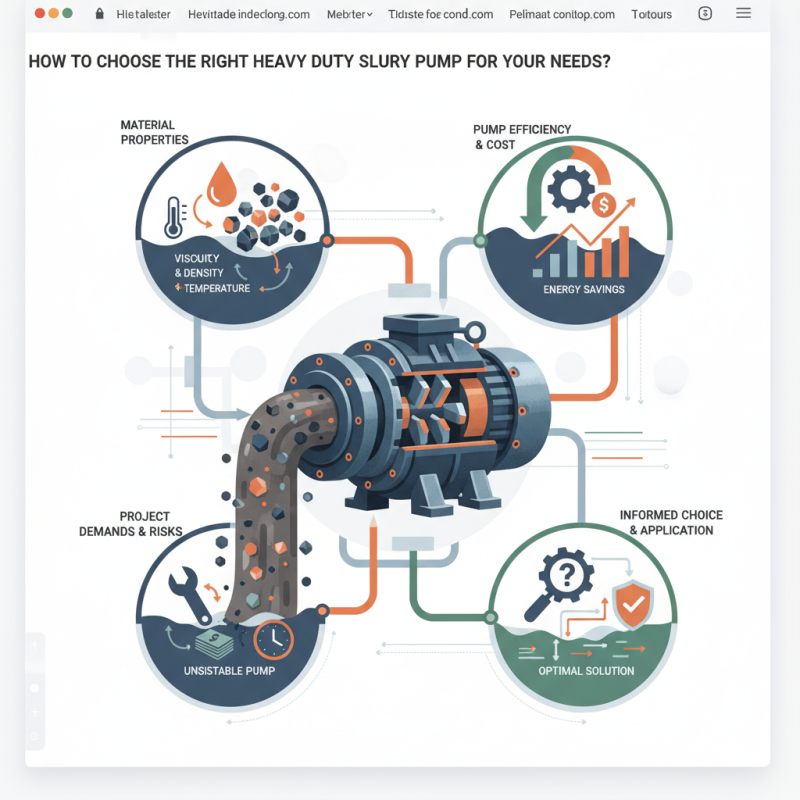
How to Choose the Right Heavy Duty Slurry Pump for Your Needs?
Choosing the right heavy duty slurry pump can be challenging. There are various factors to consider. Not all pumps are created equal. The right pump depends on your specific needs and requirements.
You need to think about the material being pumped. The viscosity, density, and temperature of the slurry matter. Each project has unique demands. Misjudging these factors can lead to costly mistakes. An unsuitable pump may underperform or break down.
Additionally, pay attention to pump efficiency. An efficient heavy duty slurry pump saves energy and reduces costs. Consider the total cost of ownership over time. Reflect on what works best for your application. A well-informed choice is crucial.
Understanding Slurry Pump Basics and Applications
When choosing a heavy-duty slurry pump, understanding the basics is crucial. Slurry pumps are designed to transfer mixtures of liquids and solids. These pumps are widely used in industries like mining and construction. They handle abrasive and viscous materials, making them essential for effective operations.
Different applications require different pump types. For example, mining slurry pumps often handle dense materials like ore. In contrast, industrial slurry pumps might deal with wastewater. Each environment has unique demands, influencing pump design and material. Consider your specific application before selecting a pump model. Performance and durability play key roles in this decision.
Pay attention to the pump's design features. For instance, a robust impeller can enhance efficiency. However, using an oversized pump might lead to energy waste. Reflect on your operational requirements and environment. The wrong choice could hinder productivity and increase costs. Gathering information and analyzing your needs thoroughly is essential.
Heavy Duty Slurry Pump Capacity Comparison
This chart illustrates the capacity (in gallons per minute) of different types of heavy-duty slurry pumps based on their application suitability. Understanding these differences helps in choosing the right slurry pump for your specific needs.
Key Factors to Consider When Selecting a Slurry Pump
When selecting a heavy-duty slurry pump, several key factors come into play. One significant factor is the type of slurry being handled. Slurries can vary in viscosity, density, and particle size. According to industry reports, a pump's efficiency diminishes if it's not matched to the slurry's characteristics. A miscalculation can lead to decreased performance and increased wear.
Another critical consideration is the pump's material construction. The ideal materials should resist corrosion and abrasion. Studies indicate that pumps made from high-chrome alloys last longer in abrasive applications. However, the cost of these materials can vary widely. Some operators may opt for cheaper options, only to face frequent replacements.
Moreover, pump performance specifications are essential. This includes flow rate and head pressure requirements. Overlooking these specifications can lead to suboptimal performance. It's reported that improperly selected pumps can lead to energy inefficiencies of up to 20%. These inefficiencies not only affect operational costs but can also cause unexpected downtime. Evaluating these factors thoroughly can significantly enhance both the longevity and efficiency of your slurry pumping system.
How to Choose the Right Heavy Duty Slurry Pump for Your Needs? - Key Factors to Consider When Selecting a Slurry Pump
| Factor | Description | Importance Level | Recommended Range |
| Flow Rate | The volume of fluid that can be moved by the pump in a given time. | High | 50-5000 GPM |
| Head Pressure | The height to which the pump can raise the slurry. | Medium | 10-150 ft |
| Slurry Density | The weight of the slurry being pumped, which impacts pump selection. | High | Specific gravity up to 1.5 |
| Particle Size | Maximum size of solid particles in the slurry. | Medium | Up to 3 inches |
| Material Compatibility | The material of the pump must be compatible with the slurry's chemical properties. | High | Corrosion-resistant materials |
| Power Requirements | The energy needed to operate the pump effectively. | Medium | 5-200 HP |
| Maintenance Needs | The frequency and complexity of maintenance tasks required for the pump. | High | Low-maintenance options preferred |
Evaluating Pump Materials and Construction for Durability
When choosing a heavy-duty slurry pump, the materials used in its construction are vital. Pumps endure harsh conditions and must resist wear. Common materials include stainless steel and cast iron. Stainless steel offers superior corrosion resistance, while cast iron is tough and cost-effective. Evaluate the specific environment your pump will operate in. Will it face acidic or abrasive materials? This will influence your choice significantly.
The construction quality also matters. Look for robust welds and well-finished surfaces. A poorly assembled pump may fail prematurely. Check for certifications or standards met during manufacturing. Ask about the testing procedures. A series of light tests is great, but ensure they simulate actual working conditions.
Do not overlook the ease of maintenance. Pumps with replaceable liners can extend service life. Regular inspections are crucial. Sometimes, we might overlook small signs of wear. A minor issue can lead to catastrophic failure if ignored. Make a checklist to monitor performance. Reflect on past experiences to avoid repeating mistakes.
Analyzing Flow Rate and Head Requirements for Efficiency
When choosing a heavy-duty slurry pump, flow rate and head requirements are crucial. Understanding these factors can optimize efficiency. Flow rate refers to the volume of slurry the pump can move over time, typically measured in gallons per minute (GPM) or cubic meters per hour (m³/h). For instance, some industry studies suggest a flow rate need of 300 GPM for typical construction sites.
Head requirements indicate the height to which the slurry must be pumped. Pumping systems usually require a net positive suction head (NPSH) to prevent cavitation. Poor calculations can lead to reduced performance. A report by the American Society of Civil Engineers shows that a mismatch between flow rate and head can cause a 25% drop in efficiency. Therefore, it's vital to analyze specific site conditions accurately.
Matching these parameters assures that your pump will handle the slurry conditions without excessive wear or energy use. Some end-users overlook the impact of viscosity on flow rates. Higher viscosity can significantly reduce flow efficiency, sometimes up to 50%. Focusing on detailed requirements can lead to better performance and longevity of the pump. Proper assessment today is necessary for optimal results tomorrow.
Maintenance and Support Considerations for Long-term Use
Maintaining a heavy-duty slurry pump requires careful planning. Regular inspections are crucial to ensure it operates efficiently. Check for signs of wear, especially in the impeller and seals. These parts are often the first to show fatigue. Replacing them can prevent larger issues later on.
Routine maintenance should also include flushing the pump system. This helps remove sediments that can cause blockages and reduces pump performance. Be aware that neglecting this step can lead to severe damages. Through consistent attention, you can avoid costly downtime.
Support is essential for long-term use. Engage with knowledgeable technicians for guidance. They can help you understand the complexities of your equipment. Having a reliable source for spare parts is also important. Unforeseen breakdowns can happen. Being unprepared during such times can be frustrating.